Painting and drawing
Draw a map of a favorite place
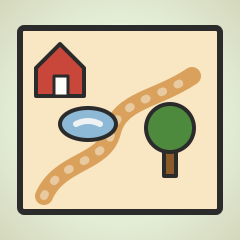
Draw a simple map together of a place they know well or like, and talk about it as it grows.
For enjoyment and time together. Adaptations are suggestions, not medical advice. Questions about health or safety go to a doctor or care team.
- Setup
- About 5 minutes
- Activity
- 15–40 minutes
- Cost
- Free
- Mess
- No mess
- Where
- At a table, seated-friendly, bedside
- Help
- Someone nearby
Materials: 3 everyday things, listed below
Large-print card (same steps, bigger type)
Who might enjoy it: People who like talking about places they have lived or loved, a garden, a street, a kitchen or a beach. Good for a quiet, conversation-led time at a table.
What you need
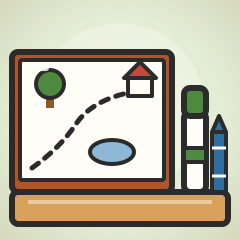
- A large sheet of plain paper
- A thick marker, or pencils or crayons
- A firm board or tray to rest on, if working in a chair or bed
No need to buy anything special
- No big paper? Use the back of a calendar page, a paper bag opened flat or several sheets laid side by side.
- No marker? A soft pencil or a crayon works well, and so does a ballpoint pen.
What to do
- Sit side by side with the paper between you and the pens within reach.
- Ask whether there is a place they would like to draw, such as a street, a garden, a kitchen or a beach.
- Make the first mark together, such as a line for a road or a shape for a house. Any mark will do.
- Ask what comes next, and draw it or hand them the pen. Any answer is the right one.
- Add one thing at a time, and let them talk or stay quiet as they choose.
- Do not correct what they draw or say. Do not ask for dates or names.
- Stop when it feels finished, or when they have had enough, and agree where to put the map.
It is okay to stop or change it
It is fine to stop after one line. Put the map somewhere safe and carry on another day, or simply talk about the place for a while, or about something else.
Pause or stop if the person seems to be in pain, distressed or tired, or simply wants to stop. Trying again another day is fine.
Did you try this?
Your answer helps us make better cards. We record the activity and your choice, not who took part.
A tidier version may be under Make it easier or different. See the easier options
An easier version may be under Make it easier or different. See the easier options
Check the substitutes under What you need. See what you need
Another activity may suit better. Find another activity
A calmer version may be under Make it easier or different. See the calmer options
Look for an activity with a simpler layout. Find another activity
Another activity may suit better. Find another activity
Make it easier or different
- Make it easier
- The helper draws everything the person points to or describes, and they choose where things go. Offer two choices at a time, such as a tree or a gate.
- In bed or an armchair
- Use a lap tray or a firm board and a smaller sheet of paper. The helper holds the paper still and draws if asked.
- For low vision
- Use a thick black marker on white paper, and keep the shapes large and few. Say aloud what you are drawing as you go.
- Easier to grip
- Use a chunky marker, or wrap a regular pen in a rolled cloth to make it easier to hold. The helper steadies the paper.
- Without words
- The helper draws and points to a spot on the map. They answer by nodding, pointing or taking the pen to make a mark.
- With children
- A grandchild draws what the older adult points to and talks about, and adds a small picture of their own beside it if they like.
Safety
- No listed safety flag. Read the safety notes.
- A place can bring back strong feelings. Listen kindly and let them lead. Offer to put the pen down, or move on to something lighter.
- Never use the map to test them. Do not correct details or ask for dates, names or what happened.
- Keep the helper nearby and offer to draw. They do not need to be good at drawing, and neither do you.
- If a memory seems to upset them, stop drawing, sit with them and offer a drink or a change of scene.
These are practical suggestions, not medical advice. You know the person best.
A map is a way into a place, not a record of it. It does not need to be accurate, to scale or to look good. The drawing gives you both something to look at, and the talk follows only if and when they want it.
What to try next
- Making and craftsMake a memory collage10 min setup · 15–30 min activity · seated-friendly
- Stories and talkLook through a photo album5 min setup · 15–40 min activity · seated-friendly
- Painting and drawingSketch what is on the table5 min setup · 10–30 min activity · seated-friendly
- MusicMake a personal songbook10 min setup · 15–40 min activity · seated-friendly