Making and crafts
Print with sponge shapes
Press a thick sponge shape into paint, then onto paper, and lift it to see the print.
For enjoyment and time together. Adaptations are suggestions, not medical advice. Questions about health or safety go to a doctor or care team.
- Setup
- About 15 minutes
- Activity
- 15–30 minutes
- Cost
- Low cost
- Mess
- Some mess
- Where
- At a table, seated-friendly
- Help
- Someone nearby
Materials: 6 everyday things, listed below
Large-print card (same steps, bigger type)
Who might enjoy it: People who like bold color, simple shapes and a result that appears the moment the sponge lifts. A good choice for someone who prefers pressing and stamping to drawing.
What you need
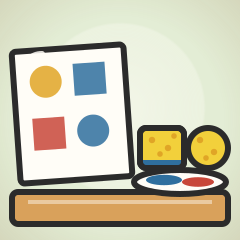
- Thick kitchen sponges, cut by the helper into big, simple shapes such as a circle, a square or a leaf
- Washable, non-toxic poster paint in two or three colors
- Two or three shallow plates to hold the paint
- Thick paper or card, plain or folded into a card
- Newspaper or a plastic cloth, and paper towels
- Scissors, for the helper to use beforehand only
No need to buy anything special
- No kitchen sponges? Use thick pieces of foam packaging or a clean, dry car-washing sponge.
- No plates? Use the lids of food tubs or a plastic tray.
What to do
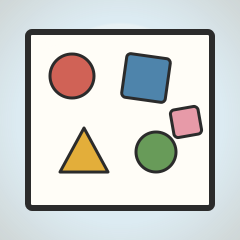
- Before you start, the helper cuts the sponges into big, simple shapes and puts the scissors away.
- Cover the table, then set out the paper and the sponge shapes.
- Pour a thin layer of paint onto each plate, one color per plate.
- Choose a shape and a color together. Any choice is a good choice.
- Press the sponge flat into the paint, then press it onto the paper.
- Lift the sponge straight up and look at the print.
- Print again in the same place or somewhere new, and change shape or color whenever you like.
- Leave the paper flat to dry and choose where to show it.
It is okay to stop or change it
It is fine to stop after one print. Leave it to dry and put the sponges and paint away, or come back to it another day.
Pause or stop if the person seems to be in pain, distressed or tired, or simply wants to stop. Trying again another day is fine.
Did you try this?
Your answer helps us make better cards. We record the activity and your choice, not who took part.
A tidier version may be under Make it easier or different. See the easier options
An easier version may be under Make it easier or different. See the easier options
Check the substitutes under What you need. See what you need
Another activity may suit better. Find another activity
A calmer version may be under Make it easier or different. See the calmer options
Look for an activity with a simpler layout. Find another activity
Another activity may suit better. Find another activity
Make it easier or different
- Make it easier
- Offer one shape and one color at a time, and press the first print together, hand over hand if the person wants that.
- Seated
- Work at a table or on a lap tray with the paper taped flat by the helper, so it stays put while the sponge is pressed.
- Easier to grip
- Cut a thick sponge as wide as the palm, or push a short, thick dowel or wide wooden spoon handle into a slit in the back so it can be held in a whole fist.
- For low vision
- Use dark paint on pale card, or bright paint on dark card, and large shapes with plain edges.
- With children
- A child chooses the color and the older adult presses the shape, then swap. Keep paint plates out of reach of anyone who might taste it.
Safety
- Adult needed for sharp tools
- Check for skin sensitivity to paint or materials
- Keep away from mouths
- The helper cuts the sponges with scissors beforehand and puts them away before the person sits down. The person does not cut anything.
- Use washable, non-toxic paint, check for skin sensitivity first, and wash hands afterward.
- Keep paint and sponge pieces away from the mouth, and stay nearby throughout.
- Throw away any trimmings from cutting the sponges, and wipe the table and floor around the plates.
These are practical suggestions, not medical advice. You know the person best.
A thick sponge is easy to hold, forgiving to press, and gives a bold print every time. Each press stands on its own, so the activity can pause or stop after any print.
What to try next
- Plants and naturePrint with leaves10 min setup · 15–30 min activity · seated-friendly
- Painting and drawingPaint a shared picture15 min setup · 30–60 min activity · seated-friendly
- Making and craftsMake a color collage10 min setup · 20–40 min activity · seated-friendly
- Making and craftsMake a torn paper mosaic10 min setup · 15–40 min activity · seated-friendly